One belt runs it all. Stay ahead of the snap.
Your serpentine belt spins the alternator, the A/C compressor, the power steering pump on many vehicles, and often the water pump. When it squeals, cracks, or glazes, we replace it, and we check the tensioner and pulleys that wear right along with it.
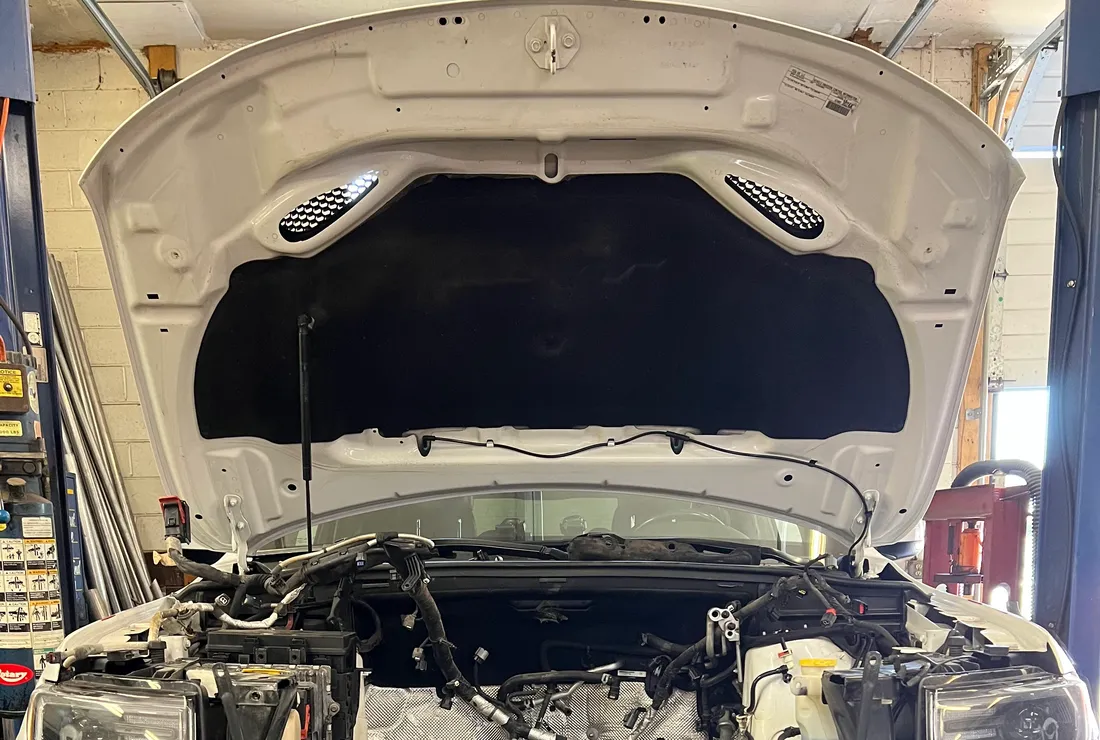
The serpentine belt is the single long belt that snakes across the front of the engine, driven by the crankshaft and routed around a series of pulleys. It spins the alternator that keeps the battery charged, the A/C compressor, the power steering pump on vehicles with hydraulic steering, and on many engines the water pump that moves coolant. One belt, most of the accessories, which is why a plain strip of reinforced rubber can park an otherwise healthy vehicle.
Belts fail two ways: loudly, and all at once. The loud way is the squeal or chirp of a belt slipping: glazed rubber, worn ribs, or a tensioner that has lost its spring. The all-at-once way is a snap, and everything the belt drives stops in the same second: the alternator quits charging and the battery light comes on, the steering goes heavy mid-corner, and if the belt turns the water pump, the engine temperature starts climbing within minutes. If that happens, pull over safely, shut the engine off, and call us at (330) 638-7600. We can help you arrange a tow-in. Driving on with no coolant flow is how a belt becomes an engine job.
The good news is that this is one of the most straightforward jobs we do at Super Tire & Muffler, and one of the easiest problems to stay ahead of. Drop the vehicle off, our ASE-certified techs check the belt, the tensioner, and every pulley it rides on, and we call you with a free written estimate. The work starts on your go-ahead, and on most vehicles it is same-day work. We have handled it that way in Cortland since 1980, as a NAPA Auto Care Center, on all makes and models.
Part of our Repair & Maintenance work. See everything we do in engine & diagnostics.
What we do
- Belt inspection for cracks, glazing, fraying, missing ribs, and rubber dust
- Serpentine belt replacement, routed correctly for your engine
- Tensioner check: spring pressure, smooth travel, and bearing noise
- Idler pulley check for wobble, roughness, and dried-out bearings
- Tensioner and idler replacement when they are worn, quoted in the same estimate
- Pulley alignment check, since a misaligned pulley chews up new belts
- A look for oil and coolant leaks near the belt path (a soaked belt fails early)
- Charging system check, because a slipping belt and a weak alternator share symptoms
- Run-up after the work to confirm the belt tracks straight and quiet
Signs you need this
- A squeal at startup, on damp mornings, or at full steering lock
- A steady chirp that rises and falls with engine speed
- Cracks across the ribs, missing chunks, or frayed edges on the belt
- A shiny, glazed look on the grooved side of the belt
- The battery light flickers when the squeal happens
- Fine black rubber dust collecting around the pulleys
- A whine or rattle from the tensioner or an idler pulley
Parts we service & replace
- Serpentine belts
- Belt tensioners
- Idler pulleys
- Decoupler and alternator pulleys
- V-belts on older vehicles
- Belt routing labels and diagrams checked against spec
What one belt actually drives
Everything bolted to the front of the engine takes its power from this one belt. The alternator is the big one: with the belt gone, the whole vehicle runs on whatever charge is left in the battery, and that is a countdown, not a cushion. Hydraulic power steering loses its assist the moment the pump stops, which is a startling thing to have happen mid-turn. The A/C compressor stops too, and on the many engines where the belt drives the water pump, coolant stops circulating and the temperature gauge starts a fast climb.
That last one is the reason we treat belt condition as more than a comfort issue. A snapped belt on a water-pump-driven engine gives you a very short window to shut things down, and an overheated engine can turn a simple belt replacement into a much bigger repair. A belt that is cracking or glazing is telling you where this is headed. Replacing it on your schedule beats replacing it on the side of the road.
The tensioner and pulleys wear right along with the belt
The belt does not keep itself tight: a spring-loaded tensioner does, and one or more idler pulleys guide the belt around the front of the engine. Those parts age at the same pace as the belt riding on them: tensioner springs weaken, the internal dampers wear, and idler bearings dry out and start to whine or wobble. A brand-new belt on a tired tensioner slips and squeals just like the old one did.
So every belt job here includes a hands-on check of the tensioner and each pulley. If they are healthy, we leave them alone and say so. If one is on its way out, it goes into the free written estimate and you decide. No pressure, just what we found. Doing it once, properly, is the quick honest version of this job.
Serpentine Belt Replacement, answered.
The questions we hear most about serpentine belt replacement in Cortland and Trumbull County.
- What does the serpentine belt actually do?
- It carries power from the crankshaft to the accessories on the front of the engine: the alternator that charges the battery, the A/C compressor, the power steering pump on hydraulically steered vehicles, and on many engines the water pump. One belt drives all of it, so when the belt stops, all of it stops at once.
- Why does my belt squeal on cold or damp mornings?
- Moisture on a worn or glazed belt makes it slip against the pulleys until things warm up and dry out, which is why the squeal often fades a few minutes into the drive. Quieting down does not mean it fixed itself. A belt that slips when damp is worn, under-tensioned, or riding on a tired tensioner, and it is telling you it is due.
- What happens if the serpentine belt breaks while I am driving?
- Everything it drives stops in the same moment. The battery light comes on because the alternator quit, the steering goes heavy if you have hydraulic assist, and if the belt turns the water pump, the engine starts overheating within minutes. Pull over safely, shut the engine off, and call us at (330) 638-7600. We can help you arrange a tow-in. Do not try to limp it home if the temperature is climbing.
- How much does serpentine belt replacement cost?
- It depends on the engine layout and whether the tensioner or an idler pulley should go with it, so we do not guess over the phone. Drop it off, we look it over, and we call you with a free written estimate. The work starts on your go-ahead. On most vehicles this is same-day work.
- How often should a serpentine belt be replaced?
- There is no single number that fits every vehicle, because belt materials and engine layouts vary. What matters is condition: cracking across the ribs, glazing, fraying, rubber dust, or a squeal are all signs it is due. Modern belts can also wear gradually without obvious cracks, so we check the belt whenever the vehicle is in for service and tell you honestly how much life it has.
- Should the tensioner be replaced with the belt?
- Only if it needs it, but it should always be checked, because the tensioner and idler pulleys wear on the same clock as the belt. A weak tensioner makes a new belt slip and squeal just like the old one. We check spring pressure, travel, and bearing noise on every belt job, and if a part is worn it goes into the written estimate for you to approve.
- Can I keep driving with a squealing belt?
- For a while, probably. But the squeal is the belt slipping, and a slipping belt is wearing fast, undercharging the battery, and one cold morning away from snapping. Since a failed belt can take the power steering and cooling with it, this is a repair to schedule soon rather than push. It is a quick job to fix and a bad one to postpone.
- Why is my new belt squealing already?
- A new belt that squeals is almost never the belt. The usual culprits are a worn tensioner that cannot hold pressure, a wobbling idler pulley, a misaligned pulley chewing at the ribs, or an oil leak soaking the rubber. That is why we check the whole belt drive, not just the belt. New rubber on a worn tensioner just moves the noise a few weeks out.
- Is the serpentine belt the same as the timing belt?
- No. The serpentine belt rides on the outside of the engine and drives the accessories. The timing belt lives inside the engine, keeps the crankshaft and camshafts in sync, and is a different job entirely, with different stakes. If you are not sure which one your vehicle is due for, call us and we will look up your engine and give you a straight answer.
- Can a worn belt make my engine overheat?
- Yes, on engines where the serpentine belt drives the water pump. A slipping belt turns the pump too slowly, so coolant moves less than it should and temperatures creep up in traffic. A snapped belt stops coolant flow altogether. If your temperature gauge is climbing and the belt is squealing, shut it down and have it looked at. The two are often the same problem.
Serpentine Belt Replacement for Cortland and all of Trumbull County, on State Route 5.
Cortland · Warren · Niles · Howland · Brookfield · Vienna · Champion · Lordstown · Bazetta · Bristolville · Mecca · Hartford · Farmington · Southington · Newton Falls · Leavittsburg · Mineral Ridge · Girard · Hubbard
Ready to get it handled?
Book online in a minute, or call and we will pick up. Walk-ins welcome too.