Quiet the growl and keep the wheel rolling true.
A wheel bearing lets each wheel spin free while it carries the weight of the vehicle. When one starts to hum, growl, or rumble, we find the bad corner, call you with a free written estimate, and replace it on your go-ahead.
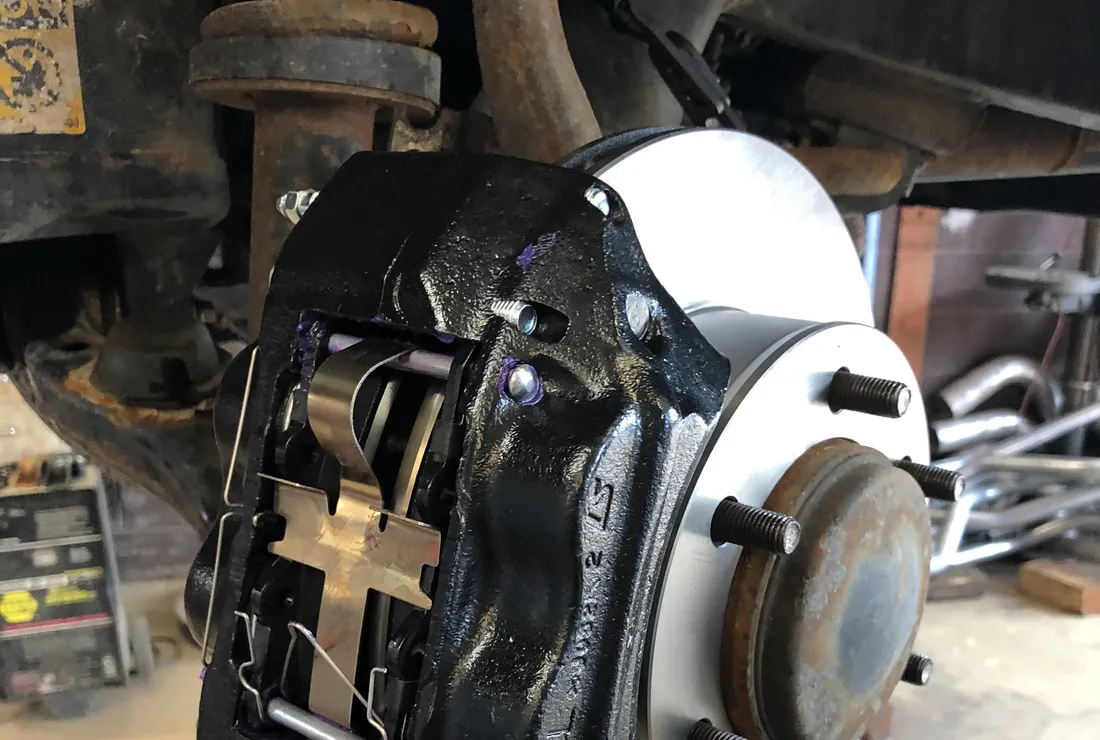
Every wheel on your vehicle rides on a bearing, a ring of hardened steel rollers that lets the wheel spin thousands of times a mile while carrying its share of the load. A healthy bearing is silent, and most drivers never think about it. A worn one announces itself: the rollers and races develop rough spots, and you start to hear a hum, drone, or growl that climbs with road speed and often changes when the vehicle leans through a curve or a lane change.
A failing bearing is more than a noise. As the wear grows, the wheel develops play and starts to wobble on its hub: steering gets vague, tire wear goes ragged, and braking suffers because the rotor wobbles right along with it. On most modern vehicles the ABS wheel-speed sensor lives in that same hub, so a worn bearing can put the ABS and traction-control lights on too. In the worst case, a bearing that has run dry can seize or come apart, and a wheel that binds or breaks loose at speed is a real safety problem. That is why we treat a growling bearing as a soon job, not a someday job.
At Super Tire & Muffler in Cortland, OH, bearing work runs the way every job here has since 1980. Drop the vehicle off, our ASE-certified techs check each corner for noise, play, and roughness, and we call you with a straight answer and a free written estimate. The work starts on your go-ahead. We are a NAPA Auto Care Center, we service all makes and models from small cars through light and medium-duty trucks, and financing is available when the timing is bad.
Part of our Repair & Maintenance work. See everything we do in brakes & suspension.
What we do
- Road test to pin down which corner the noise is coming from
- Corner-by-corner check for bearing play, roughness, and drag
- Hub assembly replacement on vehicles with bolt-in hub units
- Pressed bearing replacement on vehicles with serviceable bearings in the knuckle or hub
- ABS wheel-speed sensor and tone ring inspection during the job
- New hardware where it matters, with the axle nut torqued to factory spec
- Brake, CV axle, and suspension check at that corner while it is apart
- Scan and clear of ABS or traction-control codes tied to a failed hub sensor
- Final road test to confirm the hum is gone and the corner is tight
Signs you need this
- A hum, growl, or drone that climbs with vehicle speed
- The noise gets louder or quieter when you lean through a curve or change lanes
- A roar that sounds like aggressive tire tread on every kind of pavement
- Play or looseness you can feel in the steering wheel
- Uneven or choppy tire wear on one corner
- An ABS or traction-control light with no obvious cause
- Rumbling from one corner after a hard pothole hit
Parts we service & replace
- Wheel bearings (pressed and sealed)
- Hub assemblies with integrated bearings
- Wheel hubs and hub flanges
- ABS wheel speed sensors and tone rings
- Axle nuts and hub hardware
- Wheel seals
- Snap rings and retaining hardware
Hub assembly or pressed bearing: your vehicle uses one or the other
Most newer cars, SUVs, and trucks use a hub assembly: the bearing, the flange the wheel bolts to, and usually the ABS sensor come as one sealed unit that bolts into the steering knuckle. When it wears out, the fix is a complete new assembly: no adjustment, no packing grease, just a clean swap with the hardware torqued to spec.
Plenty of other vehicles use a pressed bearing instead: the bearing is a separate part seated in the knuckle or hub with serious force, and it takes a hydraulic press and the right adapters to remove the old one and seat the new one without damaging it. We handle both styles in the shop, and either way the axle nut gets torqued to the factory number, because that single step decides how long the new bearing lives.
Why a bad bearing can put your ABS light on
On most vehicles built in the last couple of decades, the ABS wheel-speed sensor is built into or mounted on the hub, reading a tone ring that spins with the wheel. The computer compares all four wheel speeds constantly, and it needs a clean signal from each corner to run the ABS and traction control.
When a bearing wears, the extra play lets the sensor gap wander, and rust and debris from the failing bearing can wreck the signal entirely. Sometimes the first symptom of a bearing on its way out is not a noise at all: it is an ABS or traction-control light. We scan the system, read which corner dropped out, and confirm it by hand, so you are not replacing parts on a guess.
Wheel Bearing Replacement, answered.
The questions we hear most about wheel bearing replacement in Cortland and Trumbull County.
- What does a bad wheel bearing sound like?
- The classic sound is a hum, drone, or growl that climbs with road speed: it is tied to how fast the wheels turn, not engine RPM. It often gets louder or quieter when you swing through a curve, and many people mistake it for loud tire tread. If the noise stays the same in every gear and on every pavement, a bearing is the first suspect.
- Why does the noise change when I turn or change lanes?
- Because leaning the vehicle shifts weight between the left and right wheels. Load a worn bearing harder and it growls louder; unload it and it quiets down. That behavior helps point to which side is failing, and we confirm it in the shop by checking each corner for play and roughness with the wheels off the ground.
- Is it safe to drive with a bad wheel bearing?
- It is a risk that grows with every mile. Early on a bearing hums along without drama, but the wear only accelerates: the wheel develops wobble, steering and braking suffer, and a bearing that runs completely dry can seize or come apart at speed. Once you can hear it clearly, get it checked soon. Call us at (330) 638-7600 and we will get it looked at.
- How much does wheel bearing replacement cost?
- It depends on whether your vehicle uses a bolt-in hub assembly or a pressed bearing, and on what the rust around it looks like, so we do not guess over the phone. Drop it off, we look it over, and we call you with a free written estimate. The work starts on your go-ahead. Financing is available if the repair lands at a bad time.
- What is the difference between a hub assembly and a pressed bearing?
- A hub assembly is a sealed unit (bearing, wheel flange, and usually the ABS sensor) that bolts into the knuckle and gets replaced as one piece. A pressed bearing is a separate part that has to be pressed out of the knuckle or hub and a new one pressed in, which takes a hydraulic press and more labor. Your vehicle was designed around one or the other, and we service both.
- Can a bad wheel bearing turn on the ABS or traction-control light?
- Yes, and it is common. On most modern vehicles the wheel-speed sensor is part of the hub, and a worn bearing lets enough play develop to disturb the sensor signal. The computer sees one wheel reporting nonsense and lights the dash. We scan for the failed corner, then confirm the bearing by hand rather than replacing parts on a code alone.
- Do potholes really kill wheel bearings?
- They can. A hard hit slams the rollers into their races and can leave flat spots that grow into noise over the following months. Northeast Ohio winters help from the other direction too: road salt and standing water work at the bearing seals, and once moisture gets past a seal the grease breaks down fast. Around Cortland and Trumbull County, bearings are a normal wear item.
- Should I replace wheel bearings in pairs?
- Not automatically. Unlike shocks or tires, a bearing is either healthy or it is not, so we replace the one that failed. That said, both sides have lived the same miles, so when one goes we check the other for play and roughness while the vehicle is here, and we tell you straight if it is starting to go, or if it is fine.
- Can a bad wheel bearing affect my brakes?
- Yes. The brake rotor mounts to the hub, so bearing play lets the rotor wobble: you feel it as pulsing in the pedal, and the pads wear unevenly. On top of that, a failed hub sensor can knock out the ABS at that corner. It is why the brakes at that wheel get a look as part of every bearing job here.
- How long does wheel bearing replacement take?
- A bolt-in hub assembly is often same-day work. Pressed bearings take longer, because the knuckle may need to come off and spend time on the press, and rusted hardware on an Ohio vehicle can add a fight. We give you a realistic time when we call with the estimate, so you can plan around it.
Wheel Bearing Replacement for Cortland and all of Trumbull County, on State Route 5.
Cortland · Warren · Niles · Howland · Brookfield · Vienna · Champion · Lordstown · Bazetta · Bristolville · Mecca · Hartford · Farmington · Southington · Newton Falls · Leavittsburg · Mineral Ridge · Girard · Hubbard
Ready to get it handled?
Book online in a minute, or call and we will pick up. Walk-ins welcome too.