A firm pedal starts with solid lines.
Every stop you make travels through thin steel lines filled with brake fluid, and Ohio road salt works on them year after year. When a line weeps or lets go, the pedal goes with it. We replace the rusted line, bleed the system, and put a firm pedal back under your foot.
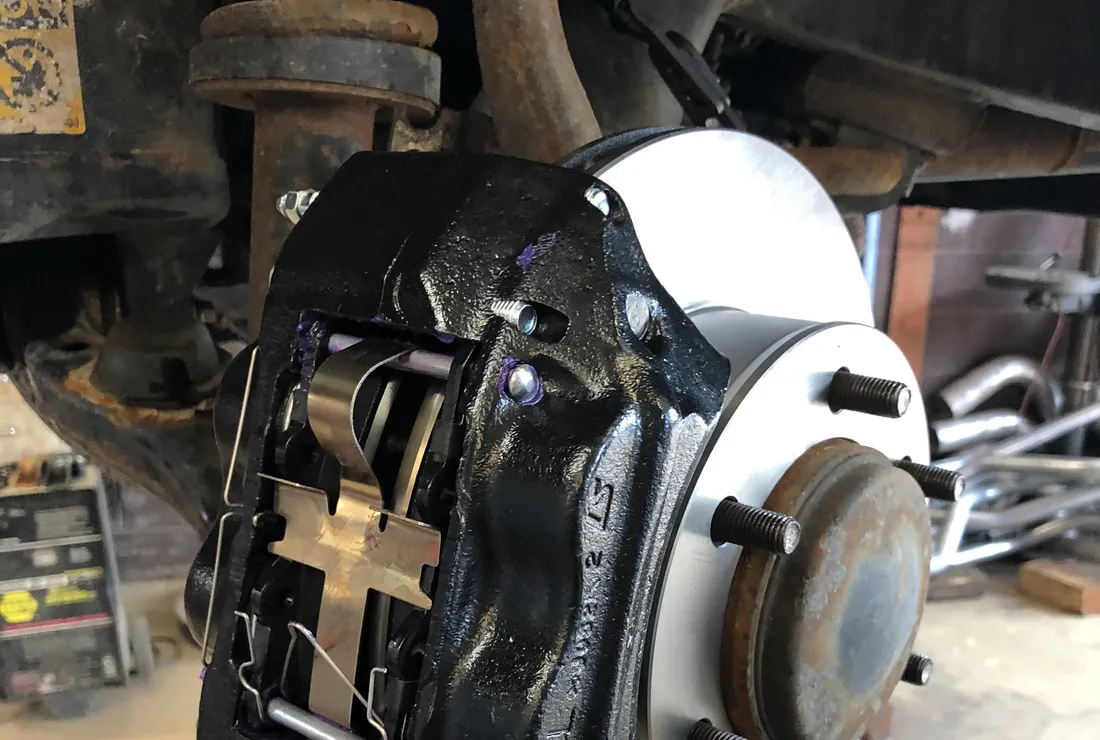
Press the brake pedal and you are pushing fluid through a network of steel lines and rubber hoses out to all four wheels. That hydraulic pressure is the only thing connecting your foot to the brakes. The system is split into two circuits as a safeguard, but both circuits ride on the same kind of thin steel line. As long as the lines are sealed, the pedal is firm and the vehicle stops. Open a leak anywhere, and pressure that should be squeezing a caliper is escaping onto the road instead.
In Northeast Ohio, the enemy is rust. Steel brake lines run the length of the underbody, right where salt spray and winter slush collect, and the clips and clamps that hold them trap moisture against the metal. Year after year the lines scale, flake, and thin from the outside in. The first sign is often small (a damp fitting, a spot on the driveway, a pedal that feels a little softer than it used to), and then one hard stop pushes through the weak point.
One thing we will say plainly: a leaking brake line is a park-it problem, not a drive-it-in problem. If your pedal sinks toward the floor or you find brake fluid under the vehicle, stop driving and call us at (330) 638-7600. We can help you arrange a tow-in. Once it is here, our ASE-certified techs go through the whole hydraulic system, then call you with a free written estimate, and the work starts on your go-ahead, the same way this shop has run since 1980. We are a NAPA Auto Care Center, we work on all makes and models, and financing is available when a repair lands at a bad time.
Part of our Repair & Maintenance work. See everything we do in brakes & suspension.
What we do
- Full brake hydraulic inspection: steel lines, rubber hoses, fittings, and connections end to end
- Replacement of rusted, weeping, or burst steel brake lines
- Section repair with proper double flares and fittings where the rest of the line is still solid
- Full-line replacement, bent and routed to match the factory run, when rust has spread too far
- Rubber flex hose replacement at the calipers and axles
- Fresh fluid and a complete system bleed after every line repair
- Pressure and pedal check to confirm the system holds firm
- A look at pads, rotors, calipers, and wheel cylinders while the system is open
- Road test to confirm the pedal is high, firm, and consistent
Signs you need this
- The brake pedal feels soft or spongy, or sinks slowly under steady pressure
- A clear-to-brown slick spot under the vehicle, often near a wheel or along the frame
- The brake warning light is on, or the fluid reservoir keeps dropping
- You have to pump the pedal to get a solid stop
- Rusty, flaking, or wet-looking lines visible along the underbody
- The pedal feel changed suddenly after one hard stop
Parts we service & replace
- Steel brake lines (pre-bent and coiled)
- Flexible brake hoses
- Brake line fittings and unions
- Proportioning valves
- Brake fluid
- Master cylinders when damaged by fluid loss
- Line clips and retaining hardware
Road salt is the whole story
Brake lines do not usually wear out: they rust out, and around Cortland that is a matter of winters. Salt brine mists up off the road and settles on the underbody, and the steel lines run right through it, tucked along the frame rails and over the rear axle. Where a clip or a body seam holds slush against the line, the rust digs in fastest, which is why lines so often fail at a spot you cannot see without getting the vehicle in the air.
This is also why we look at brake lines during other underbody work. Catching a line while it is scaling but still sealed gives you the chance to plan the repair, instead of finding out about it the day the pedal drops. If we spot one going, it goes into the written estimate with everything else: what needs doing now, and what can wait.
Section repair or full lines, and why the bleed matters
Not every rusted line means replacing every line. If the damage is local and the rest of the run is clean, solid steel, we can cut out the bad stretch and splice in new line with proper double-flared unions, a correct, safe repair, not a patch. When the whole run is scaled and flaking, splicing into rusty line just moves the leak down the road, so the honest fix is a full new line, bent and routed to match the factory path. We tell you which situation you have when we call with the estimate.
Either way, the system gets bled thoroughly when the work is done. Any time a hydraulic line is opened, air gets in, and air compresses where fluid does not, which is exactly what a mushy pedal is. Fresh fluid and a careful bleed at all four corners is part of the job, and line work is also a smart moment for a complete fluid flush if yours is dark or past due.
Brake Line Replacement, answered.
The questions we hear most about brake line replacement in Cortland and Trumbull County.
- Why does my brake pedal feel soft or spongy?
- A soft pedal means something in the hydraulic system is giving: air in the fluid, a weeping line or hose, or an internal leak in the master cylinder. On Ohio vehicles, a rusted steel line is one of the most common causes. It is not a symptom to sit on: we check the whole system and call you with what we actually found.
- Can I drive with a leaking brake line?
- No. This is one of the few repairs where the honest answer is park it. A leaking line can drop half of your braking or all of it without warning, and the pedal can go to the floor exactly when you need it most. Call us at (330) 638-7600 and we can help you arrange a tow-in. It is not a gamble worth taking.
- How much does brake line replacement cost?
- It depends on whether one section can be repaired or whole runs need replacing, and on how the fittings have survived the rust, so we do not guess over the phone. Drop it off, we look it over, and we call you with a free written estimate. The work starts on your go-ahead. Financing is available if the repair lands bigger than you planned.
- Why do brake lines rust out so fast in Ohio?
- Road salt. The brine that keeps winter roads drivable settles on the underbody and holds moisture against the steel lines all season, and the clips that secure the lines trap it there. Northeast Ohio vehicles simply live a harder underbody life than vehicles from dry states, and brake lines are one of the first places it shows.
- Do you replace the whole line or just the bad section?
- Whichever the metal calls for. If the rust is local and the rest of the line is solid, a spliced-in section with proper double flares is a correct repair. If the run is flaking end to end, a splice just moves the leak, so the right fix is a complete new line routed like the factory one. We tell you which you are looking at when we call with the estimate.
- How do I know the spot under my car is brake fluid?
- Brake fluid runs clear to light brown when fresh and darker with age, feels slick like thin oil, and usually shows up near a wheel or along the frame line. Coolant is brightly colored and engine oil is thicker and darker. If the reservoir under the hood is low and there is a slick spot on the driveway, treat it as brakes until proven otherwise.
- Do the brakes need to be bled after replacing a line?
- Yes, every time. Opening the hydraulic system lets air in, and air compresses where brake fluid does not. That compression is what a spongy pedal is. We bleed the system at all four corners and top it with fresh fluid as part of every line job, and if the old fluid is dark or moisture-heavy, it is a smart time for a full flush.
- My pedal sank once and came back. Should I still worry?
- Yes. A pedal that sinks and recovers points at a weak spot: a line starting to weep under pressure, or a master cylinder starting to bypass internally. Both only get worse, and the next time it may not come back. Have it inspected soon rather than waiting for a repeat.
- How long does brake line replacement take?
- A single section is often same-day work. Full-length lines take longer, because rusted fittings fight back and the new line has to be bent and routed cleanly along the underbody. We give you a realistic time along with the written estimate when we call.
- Can you check my brake lines when the car is in for other work?
- Yes, and it is worth asking for, especially in the fall, ahead of salt season. The lines are easy to eyeball whenever the vehicle is in the air for tires, exhaust, or suspension work, and catching a scaling line early means you can plan the repair instead of getting surprised by it.
Brake Line Replacement for Cortland and all of Trumbull County, on State Route 5.
Cortland · Warren · Niles · Howland · Brookfield · Vienna · Champion · Lordstown · Bazetta · Bristolville · Mecca · Hartford · Farmington · Southington · Newton Falls · Leavittsburg · Mineral Ridge · Girard · Hubbard
Ready to get it handled?
Book online in a minute, or call and we will pick up. Walk-ins welcome too.